Cover Letter vs Resume: The Difference, and Whether You Need a Cover Letter at All
A resume proves you can do the job; a cover letter explains why this one. The difference in one table, when you need both, and a 5-sentence template.
A resume and a cover letter do different jobs: the resume shows your qualifications, while the letter explains why they fit this particular role. If an application marks the letter optional, attach one when you can make it specific; keep it short and add context instead of repeating bullets. Below: the difference at a glance, a yes-or-no rule, and a five-sentence template.
What is the difference between a cover letter and a resume?
A resume is a concise record of your background and results; a cover letter is an introduction that connects selected experience to one job. The resume gets you screened in; the cover letter helps you get chosen.
| Resume | Cover letter | |
|---|---|---|
| Purpose | Show your qualifications and accomplishments | Explain why they fit this role and employer |
| What it contains | Roles, dates, skills, education, and results | Interest, relevant proof, context, and a clear close |
| Format | Headings, concise bullets, and scannable facts | Short paragraphs in letter or email form |
| Length | Usually one or two pages, based on experience | Under one page: 250–400 words, or about 150 for a short note |
| Point of view | Your career record across roles | Your case for this specific opportunity |
| Tone | Direct and factual | Professional, specific, and human |
| How much you tailor it | Adjust keywords and emphasize relevant proof | Rewrite the details for each application |
| Who reads it first | Often a screening system or recruiter | A recruiter or hiring manager, if they choose to read it |
| Required or optional | Almost always required | Often optional, but worth sending when possible |
A résumé presents a person's background, skills, and accomplishments, usually for a job application. A cover letter is an introduction attached to or accompanying another document, such as a résumé or CV. One lists the evidence; the other makes the connection.

Do you need a cover letter with your resume?
If the application has a cover-letter field, send one even when it says optional; skip it only when the employer rules it out or gives you no way to submit it. UC Berkeley Career Engagement also recommends including a letter with each application, including optional ones, because it introduces you and explains your interest.
| Send one when… | You can skip it when… |
|---|---|
| The form has a field, even if the letter is marked optional | There is no field and no way to attach or share one |
| You are emailing a person directly | The posting says not to include one |
| You need to explain a career change, gap, relocation, or referral | |
| The posting asks for a cover letter |
If there's a field for it, a short, specific letter beats no letter. Even 150 focused words beat a generic page. Use it to introduce yourself, expand on the experience that matters for this job, and explain why you want that employer. For a gap, keep the explanation brief and forward-looking; see this guide to explaining an employment gap if you need a model.
Which matters more: the resume or the cover letter?
The resume matters more for getting through the initial screen because it shows your experience, skills, and results in a quick scan. The cover letter can break a tie and explain motivation or context that does not belong in a bullet. Berkeley notes that some recruiters read letters, while others focus on resumes.
Spend most of your application time tailoring the resume to the posting, then give the letter 15–20 minutes. Start with the employer's need, choose one or two proof stories, and explain the connection. A good resume tailored to a job description makes both documents more convincing because the letter can build on the right evidence.
Don't give the letter the job of proving every qualification. Its job is to make the strongest evidence feel relevant and memorable.
Does the cover letter go before the resume? Order, format, and matching
When you combine both documents into one PDF, place the cover letter first and the resume second. In an email, the message itself is your letter; attach the resume and use a clear subject line and filenames.
Use the same name and contact header, font, font size, and margins across both files; Berkeley recommends matching the format style. Name files clearly, such as Maya-Chen-Resume.pdf and Maya-Chen-Cover-Letter.pdf. Keep the design simple so the documents look like a set and remain easy to read.
Do not copy resume bullets into paragraphs. Choose one or two proof stories and say what they show about your fit. For example, if your resume says you cut onboarding time, explain how that experience could help the team in this role.
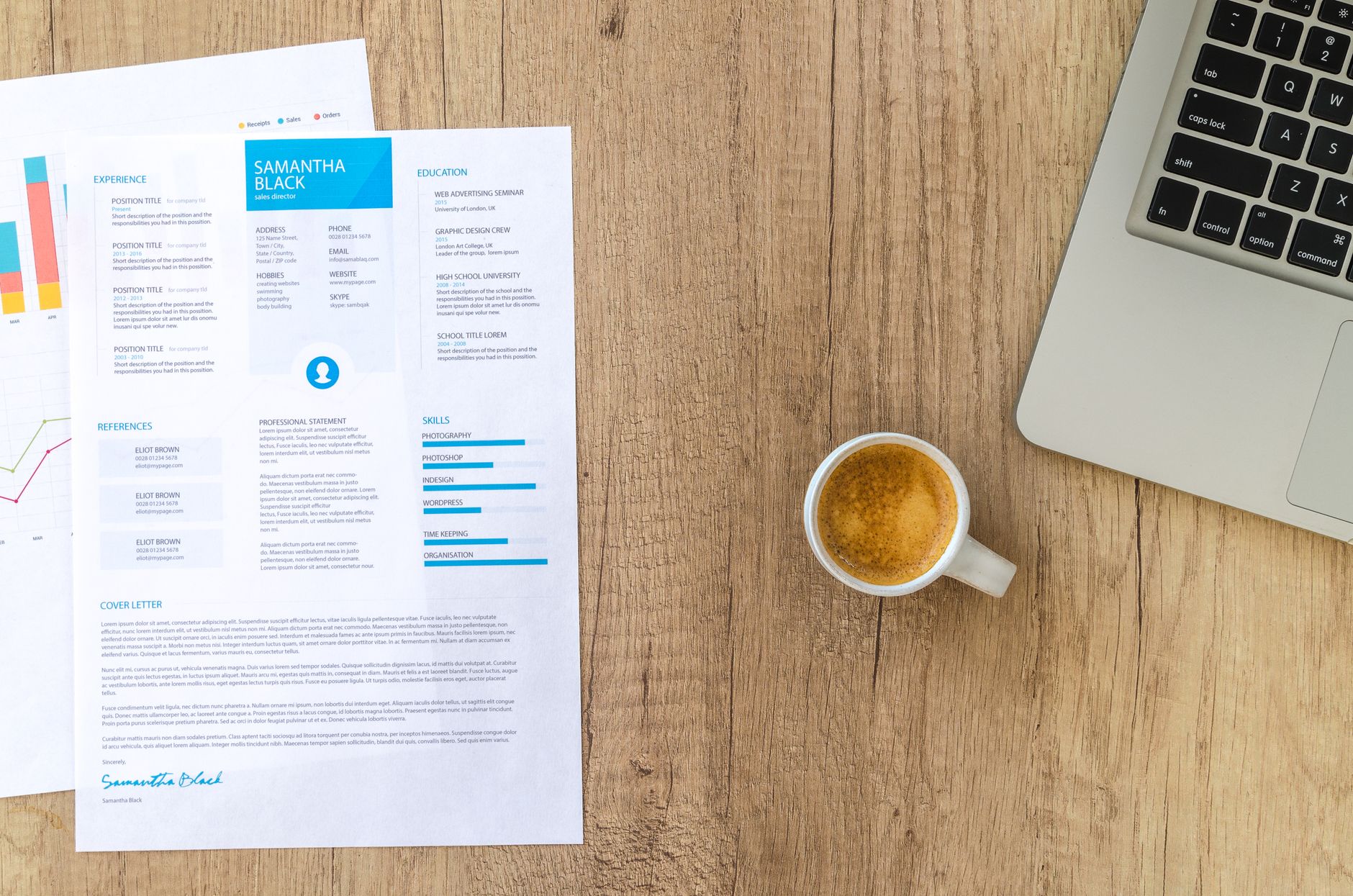
Cover letter vs cover page, cover sheet, cover note, CV, and personal statement
A CV is a résumé or career record, not a cover letter: in North America it usually means a longer academic record, while in British English it commonly means a résumé. The similar labels refer to different documents, so check the employer's instructions before uploading.
| Term | What it is | When you'd use it |
|---|---|---|
| Cover letter | A letter introducing your application and connecting your experience to the role | Job applications that request or allow a letter |
| Cover page / cover sheet | A title page or form placed before a document; not a persuasive letter | A report, submission, or application packet that asks for one |
| Cover note | A brief email-style version of a cover letter | When sending a résumé directly by email |
| CV | A longer academic or professional record in North America; common term for résumé in British English (Wikipedia) | Academic roles, or applications in countries that ask for a CV |
| Personal statement | An admissions or application essay (Wikipedia) | College, university, or graduate admissions |
If a job asks for a CV, follow the employer's regional convention and instructions; it may mean the same short résumé used locally. A personal statement is usually for admissions and gives a broader account of goals, while a cover letter is aimed at one job opening.
A 5-sentence cover letter that works with your resume
A useful cover letter can be five sentences: name the role, prove fit with an example, add another proof point or employer-specific reason, explain any important change, then close. Keep each line concrete and delete any sentence that simply restates a resume bullet.
I’m applying for [role] because [specific reason this work or employer interests you].
In [recent role or project], I [action] and achieved [relevant result].
I also [second proof point], which would help your team [specific contribution].
[If needed: I’m moving from / returning after / relocating because …, and my experience in … prepares me to contribute.]
I’d welcome the chance to discuss how I can help with [team priority]; thank you for your consideration.
Example — Customer Support Specialist:
I’m applying for the Customer Support Specialist role because I enjoy making complicated products easier for people to use.
At Northstar Books, I rewrote 30 help articles using questions from support tickets, and repeat questions fell over the next quarter.
I also trained four new teammates on the product, so I can contribute to both clear customer answers and a consistent support team.
I’m moving from retail operations into customer support, bringing years of practice resolving urgent problems calmly.
I’d welcome the chance to help your customers get more from your reading app; thank you for your consideration.
Before you submit, make sure your resume has the role's most relevant proof and your letter explains why it matters here. If you want a repeatable system for tailoring applications, Land the Offer with AI walks through the whole process, from choosing evidence to preparing for the interview.
Frequently asked questions
Can my cover letter repeat what's on my resume?
It can refer to the same experience, but it should add meaning rather than copy the wording. Pick one result and explain why it matters for this role or what you learned from it.
What is a good alternative to a cover letter?
A concise email note is the best alternative when you are contacting a person directly and there is no separate upload field. Include the role, one relevant proof point, why you are reaching out, and a polite close; if the application asks for a letter, send the letter.
Should my cover letter and resume match?
Yes. Use the same contact header, font, font size, and margins so the pair looks consistent. Matching style does not mean repeating the same content.
Do recruiters actually read cover letters?
Some recruiters read them, while others focus on the resume, according to Berkeley Career Engagement. A specific letter still gives the people who do read it a fast explanation of your interest and fit.
How long should a cover letter be?
Keep it under one page: 250 to 400 words is the usual range, and a 150-word note is fine for an optional field. The goal is to connect one or two relevant examples to the job, not retell your work history; see how long a cover letter should be for the paragraph-by-paragraph breakdown.