Chick-fil-A Interview Questions: What They Ask and What They Reward
The real chick fil a interview questions, what each one is testing, and why temperament beats experience in a franchise-run hiring process.
Most chick fil a interview questions are character questions in a uniform. A rude guest, a time you helped someone, your availability, what hospitality means to you — none of it tests your resume. It all tests whether the person across the table can picture you smiling at the counter during a Saturday rush without cracking.
That is the whole game. Restaurant skills can be taught in a week. Temperament cannot, so the interview screens for temperament first and experience roughly never.
Who actually interviews you (and why it varies so much)
Almost every Chick-fil-A restaurant is run by an independent franchise Operator, so you'll usually meet that Operator, a general manager, or a team leader — not a corporate recruiter. There is no single national script, which is why the advice you find online contradicts itself. It's all true — just at different stores.
- Some locations hire on the spot after one conversation; others run a phone screen first.
- Some run a group interview with several candidates at once.
- Corporate roles and the Leadership Development Program are a different, far more selective process.
Assume a short, warm conversation with someone who'll have to work beside you. Prepare for that and you're covered.
The questions you should actually expect
Expect behavioural and values questions, plus hard logistics about your schedule. Here's the pattern, what each one measures, and what a strong answer contains.
| Question | What it's actually testing | What a strong answer contains |
|---|---|---|
| Why Chick-fil-A? | This job, or just a job? | One thing you noticed as a customer |
| A time you helped someone | Reflex, or performance | Small, unglamorous, nobody watching |
| Handling a rude guest | Emotional regulation under pressure | Stay calm, fix it, involve a leader |
| What hospitality means to you | Care, not compliance | Anticipating a need before it's asked |
| Your availability, weekends | Reliability — the biggest operational risk | Exact hours, not "pretty flexible" |
| Working on a team | Do you create friction or absorb it | Covering for someone; the boring task |
| A spill during a rush | Initiative vs. waiting to be told | You handle it, then get back to work |
| Where you'll be in a year | Turnover risk; leadership potential | Truthful — short-term is fine, said plainly |
Nothing here is a brain teaser, and nothing requires restaurant experience. Never held a job? Answer with school, sports, church, or volunteering. Those count.
The "second mile service" idea, and why it decides your answers
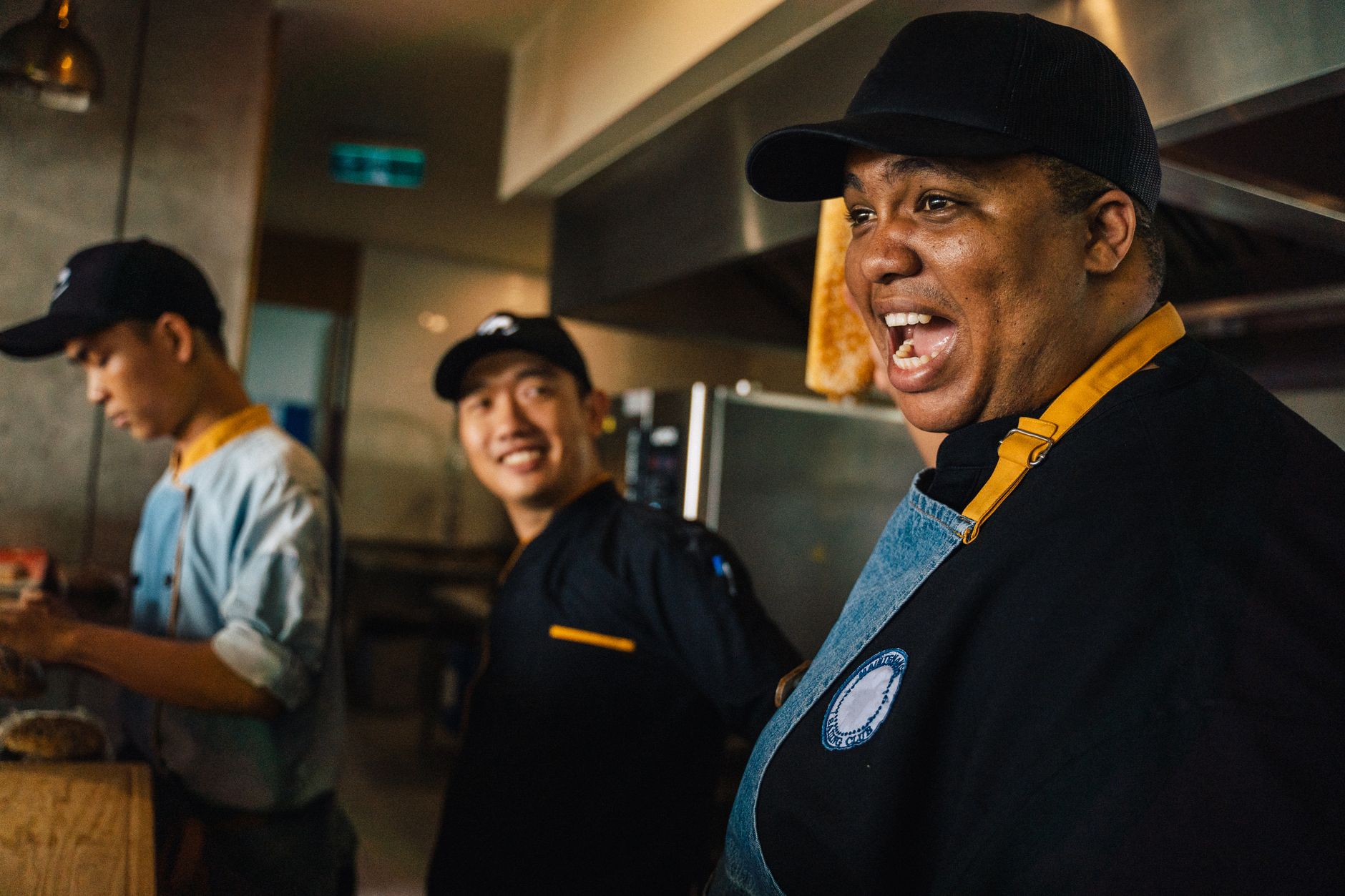
Chick-fil-A's service culture is built on going the extra step — carrying a tray out, refilling a drink unasked, walking an umbrella to a car. The pattern: do what nobody required you to do.
That reshapes almost every answer. Compliance answers describe following rules; initiative answers describe noticing and acting.
- Compliance: "I'd tell my manager about the spill."
- Initiative: "I'd grab a sign, clean it, then tell my manager."
- Compliance: "I'd apologize and follow policy."
- Initiative: "I'd apologize, remake the order, and walk it out."
Both are polite. Only one gets hired.
The bar isn't intelligence or experience. It's whether an Operator can imagine you being warm to a stranger on your worst day. Every answer should argue yes.
How to answer the rude-customer question without lying
Answer with a real story if you have one, a clear method if you don't. The trap is claiming you've never been annoyed by anyone — nobody believes it, and it reads as dishonest or emotionally unaware.
A structure that works in about 30 seconds:
- Name it plainly. "Her order was wrong and she was already late."
- Say what you did, not what you felt. Apologize, fix, offer something.
- Say when you escalate. If the guest stays upset, or safety's involved.
- End with the outcome, even a small one. "She left fine."
Our guide to answering behavioural interview questions goes deeper, and the STAR method examples walkthrough keeps a story tight. One warning: don't over-polish — a rehearsed-sounding story is worse here than a plain one.
Availability, Sundays, and the logistics that quietly decide it
Every Chick-fil-A location is closed on Sunday — chain-wide policy, not a store preference. So the availability conversation is about the rest of the week, and it matters more than candidates realise.
Restaurants are staffed against predictable rush windows. An enthusiastic candidate who can't work Friday night is often less useful than a quiet one who can. Be exact:
- Give real days and hours: "Monday to Thursday after 4, all day Saturday."
- Flag school terms, sports seasons, or a second job up front.
- Don't promise open availability you'll walk back in week two. Operators remember.
- If you're a minor, know your state's hour restrictions — the manager will ask.
Honesty here costs you a few offers and saves you from every job you'd have quit.
What to wear, what to bring, and what to load in your head
Dress one notch above the uniform: clean polo or button-down, dark trousers or a neat skirt, closed shoes, tidy hair. You're not dressing for a boardroom — you're signalling that you take a counter job seriously. Our what to wear to a job interview guide applies, minus the suit.
Bring a short resume (many candidates bring nothing), your availability written down, a pen, and ID or work-permit paperwork if you're a student.
Then stop memorising scripts. Load three stories and let them adapt:
- A time you helped someone with nothing in it for you.
- A time you stayed calm while someone else didn't.
- A time you noticed something needed doing and did it.
For the opener, keep it to 30 seconds: who you are, one strength, why this store. If you ramble, our guide to answering "tell me about yourself" trims it fast.
The mistakes that sink otherwise good candidates
Most rejections here aren't about weak answers. They're about small signals that suggest friction ahead.
- Money first. Ask about pay at the end, not the start.
- Warm to the interviewer, cold to everyone else. Team members notice how you treat them in the lobby, and they talk.
- Trashing a previous employer. It reads as "this person will talk about us that way."
- Vague availability. The fastest way into the maybe pile.
- No questions at all. Have two ready from our questions to ask the interviewer list. "What does a great team member here do differently?" is enough.
- No follow-up. A three-line thank-you email after the interview still stands out because so few people send one.
Those three stories cover roughly 80% of chick fil a interview questions, because 80% of them are one question in different clothes: are you the kind of person we want facing our customers? Answer with specifics, not adjectives. Be exact about your hours. Be kind to whoever takes your name at the door.
Want that discipline across a whole job hunt — positioning, resume, interview, negotiation, with copy-ready AI prompts and a hard rule that nothing goes on paper unless it survives the interview? That's what Land the Offer with AI is built for. Prepping for several interviews at once? Our interview questions hub is the map.
Frequently asked questions
How long does a Chick-fil-A interview usually take?
Usually 15 to 30 minutes for a team member role, though it varies because each restaurant is independently operated. Some locations add a group session, a shift observation, or a second conversation with the Operator. Ask when you book it.
Do I need restaurant experience to get hired?
No. Entry-level hiring leans on attitude, reliability, and availability far more than prior food service work. With no job history, use examples from school, sports, volunteering, or caring for family.
What should I say when they ask about Sundays?
Nothing complicated — every location is closed on Sundays, so it isn't a question about whether you'd work one. It comes up as context while they map your week. Be precise about the days and hours you can actually commit to.
Do they ask about faith or religion in the interview?
You should not be asked about your religious beliefs — questions about protected characteristics aren't appropriate in any job interview. Values questions about service, teamwork, and how you treat people are normal and fair game. If something feels out of bounds, redirect to your work values.