How to prioritize tasks — pick three, not twenty
How to prioritize tasks without ranking your whole list — the three-question filter that decides which at most three things actually earn today, from Do Only 3 Things a Day.
The fastest way to prioritize tasks is to stop ranking your whole list and run each candidate through three questions instead: is it important enough to matter today, does it move a goal you actually care about, and can you finish it this session. Whatever survives all three — at most three items, often fewer — is your day. Everything else waits on a separate list.
That's the mechanical answer. Here's the sharper one, and it's the one that actually changes how you work: most advice on how to prioritize work has you sit down and rank all twenty items on your to-do list, one through twenty, most important to least. That ranking exercise feels responsible. In practice, it's one of the most convincing forms of procrastination available, because it looks exactly like work.
The real problem with how to prioritize tasks: ranking isn't the job
Give a 20-item list enough time and you already know what happens. Fifteen easy, comfortable, ten-minutes-and-it's-off-my-plate tasks get done. The five that would actually change the outcome — the hard, important, slightly scary ones — get pushed to tomorrow, again. Most prioritization methods don't fix this — the Eisenhower matrix, ABCDE lists, MoSCoW all still start with the same move: write everything down, then sort it. Sorting twenty things takes real mental effort, and effort spent sorting is effort not spent doing.
Productivity isn't doing more things. It's making sure the few things that matter actually get done. That reframe changes the job completely. You don't need a ranked list of twenty. You need to find the three, at most, that earn today — and let the rest go without guilt, because letting them go is the whole point. If several tasks seem equally valuable, use the 80/20 rule to find the work that changes the outcome, not the work that merely keeps you busy.
The three-question filter
Ask this of a task before it earns a spot on today's list. All three need to be yes.
- Important enough? If this were the only thing you finished today, would the day count as well spent? Not "would it help" — would it be enough, on its own.
- Aligned, or just loud? Does it move a goal you actually care about this week or quarter — or is it someone else's urgent-looking noise wearing a costume of importance?
- Doable today? If it's too big to finish in one sitting, that's not a disqualifier. It's a sign to cut it down until a piece of it is.
Notice what this filter never asks: what's easiest, what's already half-done, what's been sitting there longest making you feel guilty. Don't pick what you can do. Pick what's most worth doing. Those are two different lists, and most people's to-do lists are quietly built from the first one.

Write the result, not the task
Once something passes the filter, how you write it down decides whether it survives the day. "Work on the report" isn't a task, it's a mood — it has no finish line, so it quietly absorbs an hour or evaporates under the first interruption and nobody notices either way. Write it as a result you can picture: not "work on the report," but "finish the first draft of section two." A good item has an obvious picture of done attached to it before you ever start.
This one habit resolves a surprising amount of vague dread. Fuzzy items generate anxiety because part of you can never quite tell whether you're making progress on them. Specific results generate momentum, because there's no fog to hide in — you either did the thing or you didn't.
The 1+2 structure
Your at-most-three aren't equal, and treating them that way is a mistake. One is the hard lead — the important, brain-burning task you've been quietly avoiding. The other two are support. Put the hard one in whatever window of your day your energy is genuinely highest, and do it first, before anything else gets a chance to eat that window. That is also the useful part of the Eat the Frog approach to ordering your day: protect the difficult work before small demands scatter your attention.
This is where good intentions quietly fail without anyone noticing: people put the hard thing third, "once the easy stuff is cleared," and the easy stuff — being easy — expands to fill the whole morning. By the time it's clear, the energy for the hard task left along with the morning.
Everything else doesn't disappear — it just stops pretending
The other seventeen items from your original list aren't gone, and this isn't a system for pretending they don't exist. They move to a separate everything-else list, where they wait their turn without a costume on. They stop posing as today's most important thing, which was the only thing ever actually wrong with them.
Small scraps — the reply, the expense report, whatever else takes two minutes — don't each get their own slot either. Bundle them into a single slot on the list, handled together in one block, instead of letting a dozen tiny tasks each claim the same weight as your one hard thing.
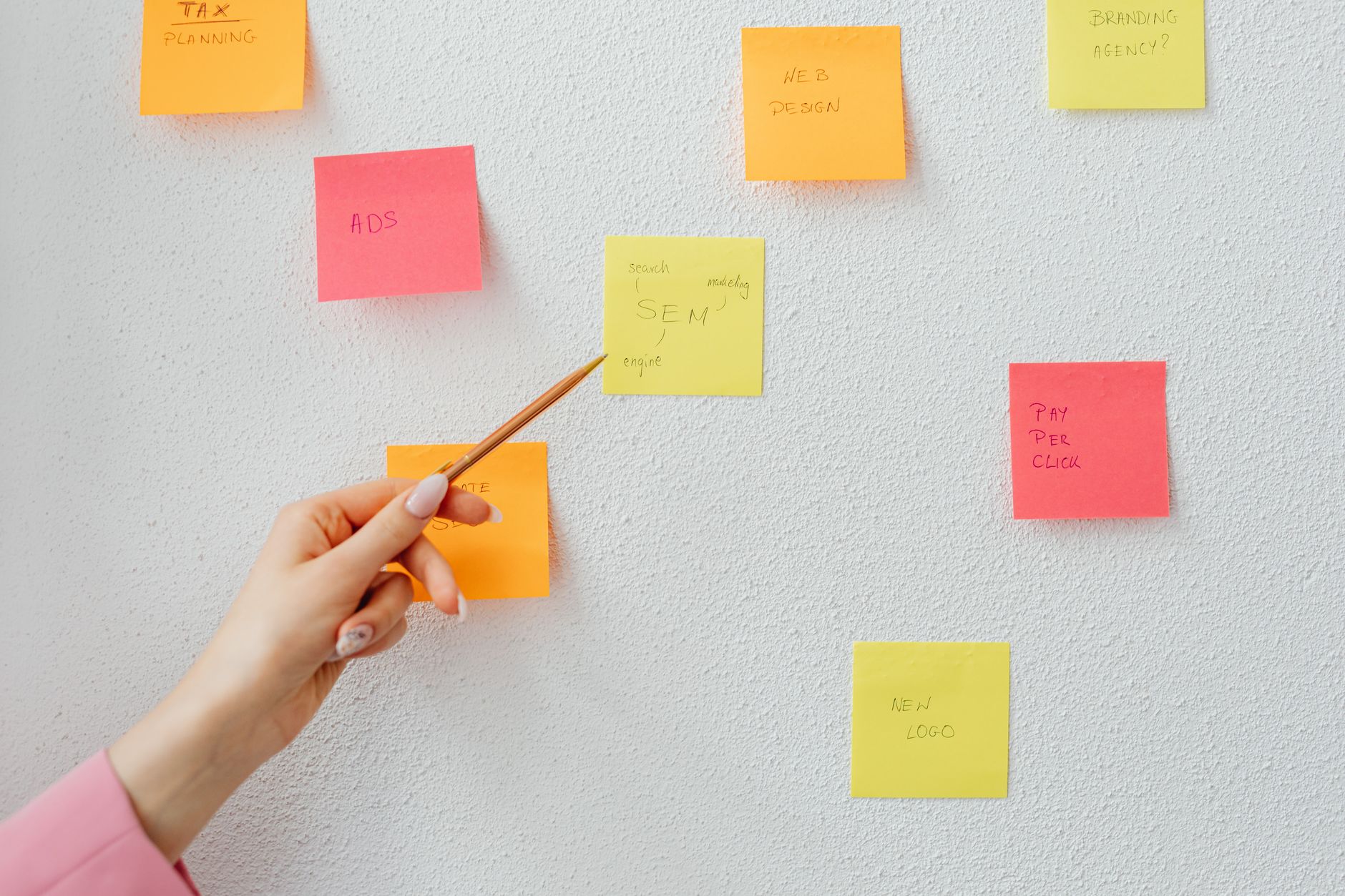
Nothing on that wall is wrong to have written down. The mistake is treating all of it as this morning's job. A list is where ideas go to wait their turn — not a ranking you owe an answer to today.
A worked example: turn eight demands into three results
Choose the outcome that would make the day worthwhile, then use the remaining slots for work that supports it or prevents a real consequence.
Suppose tomorrow's list says: prepare a client proposal, answer six emails, update the project board, review a coworker's draft, fix a pricing-page typo, plan next week's launch, and submit an expense form.
The proposal is due tomorrow, so it becomes the hard lead: “send a complete proposal draft by 11 a.m.” “Plan the launch” becomes “choose the launch date and write the launch sequence.” The promised review becomes “return the draft with comments on its argument and opening.”
Emails, the project board, the typo, and the expense form become one admin block after the proposal.
Every survivor now has a reason, a finish line, and a place in the day. If a task has none of those, it has not earned today.
Tomorrow morning
That's the complete answer to how to prioritize tasks — not a smarter ranking system, a smaller list. Pick your at-most-three tonight, not tomorrow morning while already scrambling. Run each candidate through the three questions, write the survivors as results, lead with the hard one, support it with two, and let everything else sit on its own list without apology. No matrix, no software, no twenty-item ranking exercise required. To make the choice survive beyond one enthusiastic morning, build a routine that works when motivation runs out.
This is just the Choose step. Do Only 3 Things a Day covers the rest of the daily loop — protecting the time you just chose, doing the work without paying the tax of switching tasks, and a two-minute nightly review that picks tomorrow's three before you've even lost the thread.
Frequently asked questions
How do I prioritize tasks when everything feels urgent?
Separate real deadlines and consequences from requests that merely arrived loudly. Choose the tasks that will materially worsen if they wait, and move the rest off today's list. If everything still appears urgent, ask the person who owns the outcome to choose the tradeoff.
Should I prioritize important tasks or quick wins first?
Prioritize the important task first when it needs your best attention. Quick wins belong in a later admin block unless one removes an obstacle to the important work. Clearing small tasks first often spends your strongest hour on work that never deserved it.
How do I prioritize tasks with the same deadline?
Choose the task with the larger consequence, stronger goal alignment, or more people depending on it. If those are equal, start with the one that requires more concentration. Give the remaining task the next protected block instead of switching between them.
How often should I reprioritize my task list?
Reprioritize at day's end and again only when facts change. A new deadline, blocked dependency, or emergency can justify replacing one of your three; ordinary messages cannot. Swap tasks instead of letting the daily list grow.