Home Depot Interview Questions - Product Knowledge Is Optional, Helpfulness Is Not
The real Home Depot interview questions, what each one is actually testing, and why they hire for helpfulness and availability instead of trade knowledge.
Most home depot interview questions are not testing whether you know the difference between PVC and PEX. They are testing whether you will ask a confused customer three good questions and then walk them to the aisle instead of pointing at it. Availability, physical willingness, safety judgment, and a genuine instinct to help are the four things that actually decide the hire — product knowledge is trained on the floor.
So stop cramming lumber dimensions. Build three short stories about times you helped someone who could not explain what they wanted.
Why home depot interview questions focus on helpfulness, not hardware
Because of who walks in the door. Customers arrive mid-project, frustrated, holding a broken piece of something they cannot name. "I need the thingy that goes on the end of the hose" is a real, everyday request.
An associate who knows plumbing but shrugs at that customer is worthless. One who knows nothing but says "let's go look at it together" solves the problem — the store is full of people who do know, and the job is to bridge the gap.
So the interview screens for the bridging behavior:
- Do you move toward confusion or away from it?
- Do you ask questions before you answer?
- Do you hand off, or do you abandon?
- Will you actually show up at 5:30 a.m. on a Saturday? Retail hiring dies on availability more than on skill.
The core question set, and what each one is really asking
Eight clusters cover almost everything you'll be asked. Wording varies by store; the intent is stable across big-box retail.
| Question | What it tests | What a strong answer contains |
|---|---|---|
| A customer doesn't know what they need. | Diagnose or deflect | What they're building, what failed, what it connects to — then walk them there |
| What's your availability? | Schedule fit, honesty | A specific, true schedule; hard limits up front |
| Working outside in Garden? | Willingness, self-knowledge | Plain yes, plus evidence you've worked in weather |
| Can you lift heavy product all shift? | Physical realism | Honest capability, equipment, a second person |
| A coworker is using equipment unsafely. | Safety judgment, courage | Stop it kindly, then tell a supervisor. No hesitation |
| A customer needs another department. | Cross-department teamwork | Escort or radio; stay until the handoff lands |
| Tell me about an upset customer. | Composure under heat | Listen, own the store's part, offer options, escalate cleanly |
| What if you didn't know the answer? | Honesty vs. bluffing | Say so, find someone who does, stay with the customer |
Bold rule: every answer ends with the customer taken care of — not with you explaining how you felt.
Diagnosis and availability: the two answers that decide it
Answer the confused-customer question by narrating a diagnosis, and answer the logistics questions with real numbers. These two carry more weight than everything else on the list.
- Ask what they're working on. "What are you trying to fix?" gets more than "what size do you need?"
- Ask what failed or what it attaches to. Broken part, photo on their phone, brand on the box.
- Walk them to the aisle. Not point. Walk.
- Confirm before they leave. "Does that look like the one that came off?"
Close with what happened: "he came back the next weekend and asked for me" beats "and the customer was satisfied." No retail history? Helping a relative pick a router counts.
Then be specific about logistics, because week one checks these against reality:
- Availability: real days, real hours. If you can open, say so — early availability is genuinely valuable. Name any hard constraint once, without apology.
- Weather: Garden and Lot are outdoor jobs in whatever the season brings. Say it flat: "I've worked outside, I dress for it, it doesn't bother me."
- Lifting: what you can actually do, and how you work smart — cart, dolly, forklift certification, a two-person lift instead of an injury.
Overpromising availability is the most common self-inflicted wound in retail interviews. "Anytime," then declining Sundays, is worse than "no Sundays" up front — one is a scheduling fact, the other is a trust problem.
If a pay range comes up, how to answer salary expectations works for hourly roles too — anchor on the posted range and stay calm.
Safety judgment: the question with only one right answer
Say you stop it — immediately, politely — and then tell a supervisor. There is no clever nuance here.
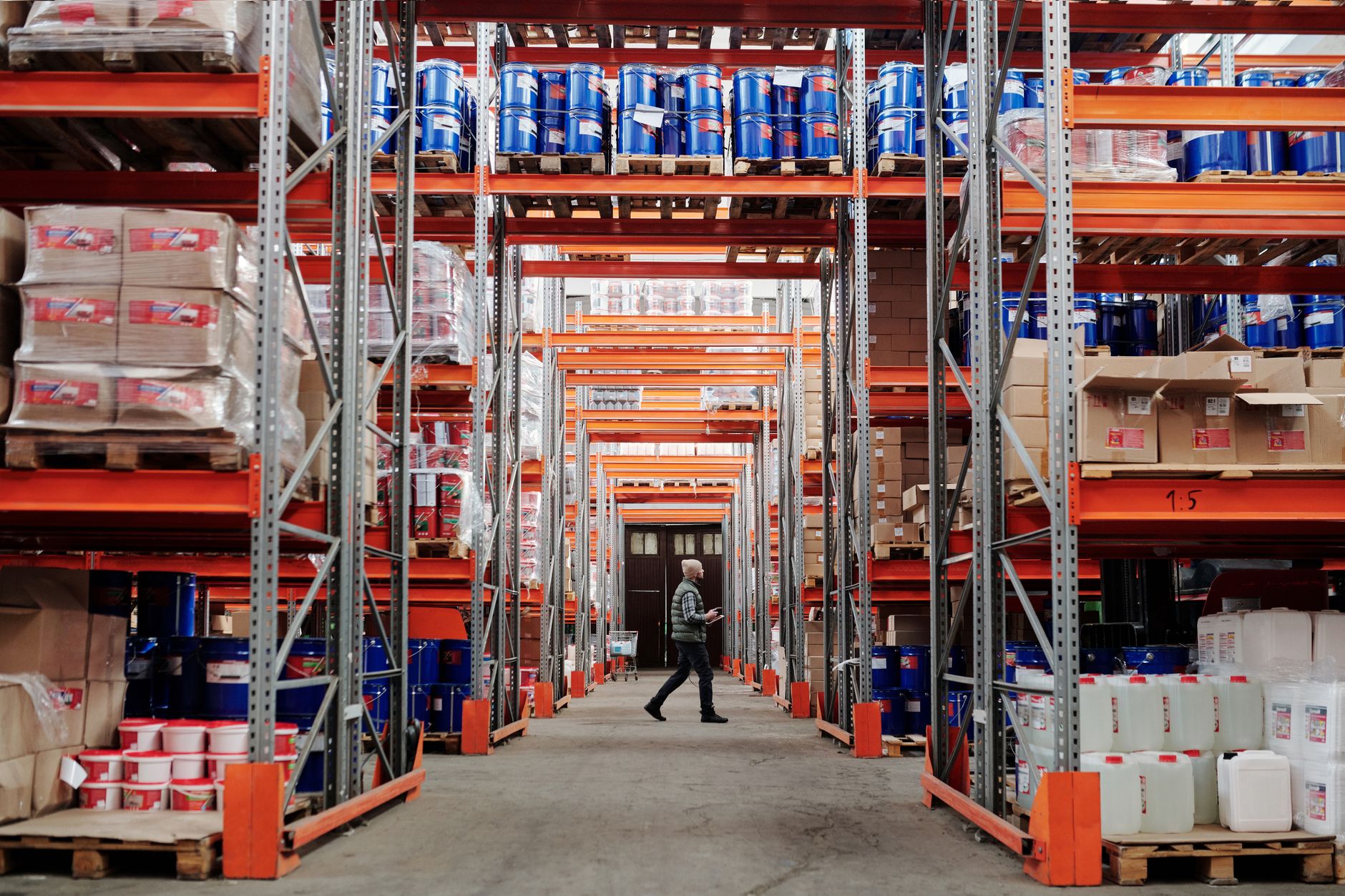
Warehouses have real hazards — ladders, box cutters, powered equipment, tall racking, heavy freight. A candidate who says "I wouldn't want to get anyone in trouble" has failed the question.
Strong shape: "I'd say something right then — 'hey, let me spot you.' Then I'd let a supervisor know, because if it happened once it'll happen again." Any safety training — food service, warehouse, construction, lifeguarding, driving — is worth one clause.

What you know, and what you do when you don't
Lead with real experience, and admit the gaps just as fast — that pairing is what hiring managers are listening for. Hands-on background shortens your ramp-up; a stated limit proves you won't guess at a wire gauge.
Say it concretely, without inflating it:
- "I framed and drywalled my basement — I know the lumber and fastener aisles."
- "Three years as an electrician's helper. Comfortable with conduit, wire gauge, breakers."
Then add the clause that makes hiring managers relax: "There's plenty I don't know, and I'd rather find the person who does than guess." No trade background? Don't fake it — "I'm not a tradesperson, but I learn products fast and I'm not afraid to ask" is a complete answer.
Guessing in a hardware store is not harmless: wrong fitting means a second trip, wrong wire gauge is a fire. The store would rather you say "let me get Dave from Plumbing" a hundred times than bluff once. Most candidates miss the handoff: "I'd walk them over and wait until the other associate had the question, so the customer never explains it twice." The STAR method examples format keeps that story to sixty seconds.
How to prepare in one evening
Do these four things and you're ahead of most of the room.
- Write three stories: a confused customer, a conflict, a time you asked for help. Practice each out loud until it's under a minute.
- Fix your availability answer on paper so you don't drift in the room.
- Prepare two questions to ask them — what a great associate here does differently, and what the first ninety days look like. More in questions to ask the interviewer.
- Dress one notch above the floor. Clean, tidy, closed-toe shoes. Not a suit. Send a thank-you afterward if you have the email — four minutes, and almost nobody does it.
Bottom line: home depot interview questions ask whether you'll take care of a stranger having a bad project day, whether you'll show up when the schedule says, and whether you'll admit what you don't know. Answer those three honestly and the job is very winnable — more breakdowns live in our interview questions hub.
The full system — positioning, resume bullets, and interview stories built from what you've actually done — is in Land the Offer with AI, which holds one line hard: everything on your resume has to survive the interview.
Frequently asked questions
Do I need home improvement knowledge to get hired at Home Depot?
No — product knowledge is trained, and stores hire plenty of people out of food service, warehouses, and customer service. What they can't train quickly is willingness to approach a confused customer, and reliability.
How should I answer the availability question?
With specific days and hours that are actually true. Early-morning and weekend availability is genuinely valuable, so say so if you have it — and name any hard constraint up front, not after you're scheduled.
What should I wear to a Home Depot interview?
Clean, neat, one step above the floor: collared shirt or simple top, decent pants, closed-toe shoes. A full suit reads as a mismatch here. See what to wear to a job interview for the general rules.
Is the interview one-on-one or a group?
It varies by store and season — one supervisor, or several managers in sequence, and hiring surges can change the format. Prepare the same stories either way; the questions don't change much, only the audience does.