Focus Music — What Actually Helps Concentration, and What Just Feels Productive
Music helps focus by masking a worse room and marking the start of a session, not by tuning your brain. Here is what to play, how loud, and when silence wins.
Focus music helps for two boring reasons: it covers a noisier, less predictable acoustic environment, and it tells your brain that a work session has started. It does not tune your brainwaves or unlock a hidden state. Accept that and the choice gets simple — pick something instrumental, familiar, and fixed, set it slightly too quiet, and stop shopping for the perfect playlist while the work waits.
Most advice gets this backwards. It sells you a genre as if the frequencies were doing the work. The genre matters far less than three things you control: whether it has words, whether you already know it, and whether you decided on it before you sat down.
Why focus music works — masking and marking, not brain-tuning
The honest mechanism is unglamorous. Music helps because the alternative is usually not silence — it is a flatmate, a coffee grinder, a colleague's phone call, a bus. Steady sound smooths out those spikes, and unpredictable sound is what actually breaks attention, not volume.
The second effect is behavioural. Press play, headphones on, work begins. You are building a cue, the same way a specific desk or a specific mug becomes a cue. That is real and useful, and it has nothing to do with the music being "scientifically engineered."
Which means the ceiling is modest. Focus music makes a mediocre environment workable and a start easier. It cannot fix a task you have not defined, and it cannot rescue an afternoon with eleven open tabs of competing priorities. If you feel scattered before the first track ends, the problem is the list, not the sound — start with how to actually stay focused rather than a new playlist.
The one rule that holds up: lyrics compete with words
Here is the single rule worth memorising. If the task uses language, do not put language in your ears. Reading, writing, editing, studying, drafting an email you care about — your brain processes the lyrics whether you want it to or not, and the two streams fight over the same machinery.
For work that is repetitive, physical, or spatial, that conflict mostly disappears. Cleaning, filing, walking, sorting, gym sessions, data entry — sing along. The cost is close to zero and the mood boost is genuine.
The grey zone is coding and analysis. Some people read code like prose and need instrumental; others handle a chorus fine. Test it honestly for a week instead of arguing about it. Judge by output, not by how the session felt — feeling energised and producing nothing is the most common trap in this whole topic.
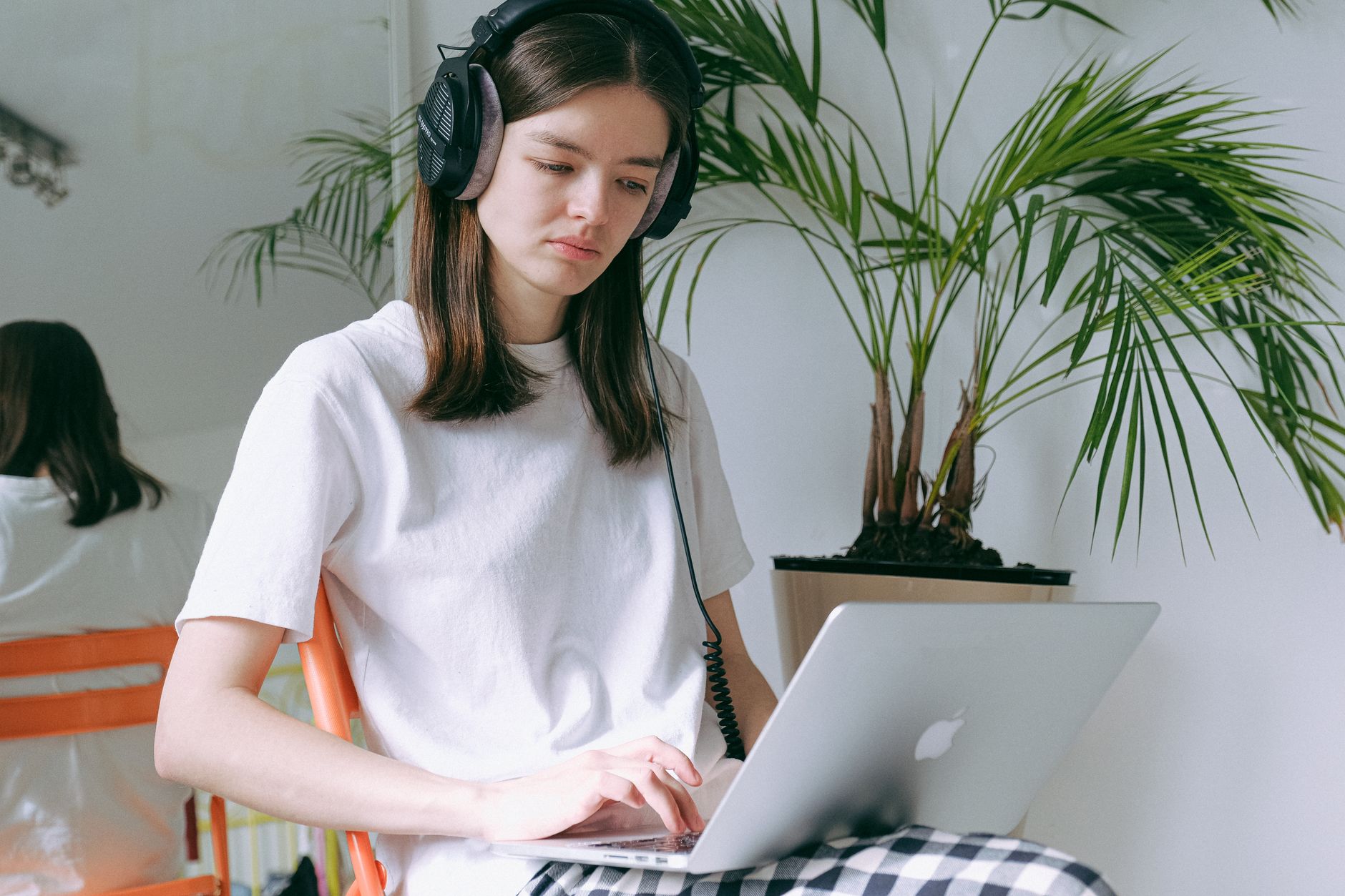
Familiar music beats new music, every time
New music demands attention. That is what makes it enjoyable and exactly what makes it a poor backdrop. A track you have never heard has surprises in it — a key change, a drop, a voice you want to identify — and each surprise pulls a slice of the attention you were trying to protect.
Familiar music has no surprises left. You know where it goes, so you stop tracking it. The best focus music is music you have already finished being interested in.
This is why "discover new study beats" recommendations quietly work against you. Save discovery for the walk home. For work, loop the same album you have heard two hundred times, and let boredom be the feature.
What to play for which kind of work
Match the sound to the task, not to your mood. Here is the whole decision in one table.
| Work type | What to play | Why |
|---|---|---|
| Reading, writing, studying | Instrumental ambient, film scores without vocals, brown noise | Words on the page and words in your ears compete directly |
| Coding, analysis, design | Familiar lo-fi or a game soundtrack | Repetitive and low-event by design; built to be ignored |
| Email, admin, data entry | Anything, lyrics fine | Low language load; music mainly buys tolerance for boredom |
| Chores, exercise, commuting | Loud, lyrical, whatever moves you | No competition at all — enjoy it properly |
| Loud open office or cafe | Brown or pink noise | Masks nearby speech better than melody does |
| The first hard hour of the day | Your fixed opening tracks | You want a starting signal, not a decision |
A quick honest read on the popular genres:
- Ambient and instrumental — the safest default. Boring on purpose.
- Lo-fi — works for the same reason: repetitive loops, no narrative, no surprises. The aesthetic is doing more than the sound is.
- Classical — fine, but not automatically superior. A dramatic symphony is more distracting than a lo-fi loop. Slow, even Baroque works better than anything with big dynamic swings.
- Video game soundtracks — genuinely well-suited, because composers wrote them to support concentration without stealing it.
- Brown and white noise — the best choice for masking speech. Brown is lower and gentler on the ears than white.
- Binaural beats — the evidence here is thin and the marketing is loud. If they help you, it is almost certainly the ritual and the masking, not entrainment. Do not pay a subscription for that.

Volume, and why a fixed playlist beats DJ-ing your session
Set it lower than feels right. The correct volume is loud enough to cover the room and quiet enough that you could not sing along if asked. If you are turning it up to drown out your own thoughts, you are treating a focus problem with a volume knob.
Then commit to a playlist and never touch it. Skipping tracks is task-switching with a soundtrack — each skip is a small decision, and decisions are the scarce resource across a working day. Two hours of one album beats two hours of curating.
Build a three-track opening you always use. Same three, same order, every session. After two weeks those tracks stop being music and start being a doorway; hearing them is the cue to begin. That is the ritual layer that supports deep work, and it costs you nothing to set up.
When silence actually wins
Silence wins when the room is already quiet and the task is genuinely hard. Dense reading, complex writing, first-draft thinking, anything where you need to hear your own reasoning — audio is a tax there, however pleasant.
Silence also wins when you notice you are using music to avoid starting. Twenty minutes of playlist maintenance is procrastination in a nicer outfit, and it is one of the quieter ways people lose whole afternoons.
Two practical caveats. If you study in libraries or shared spaces, sound is a tool for privacy as much as concentration — see the fuller approach in staying focused while studying. And if concentration has been impossible for weeks, alongside disrupted sleep, appetite or mood, that is not a playlist problem and a doctor is a better next step than a new pair of headphones.
So: focus music earns its place as a masking tool and a starting bell, and nothing more. Instrumental for word-work, familiar over new, one fixed playlist, a volume you barely notice, silence when the room is already calm. The reason it helps at all is that it removes decisions from the front of a work session — which is the same logic behind Do Only 3 Things a Day, a short system for picking three things, protecting them, and doing them one at a time. Worth reading if the real problem turns out to be your list, not your sound.
Frequently asked questions
Does focus music actually improve concentration?
Modestly, and indirectly. It masks unpredictable noise and signals the start of a session, both of which make focusing easier. It does not enhance cognitive ability, and in a quiet room during hard reading it can slightly hurt.
Is lo-fi better than classical for studying?
Neither is inherently better. Lo-fi wins on predictability — repetitive loops with no dynamic surprises — while a dramatic classical piece can pull attention. Slow, even instrumental of any genre is the real criterion.
Do binaural beats work?
The claims are far ahead of the evidence. Any benefit you feel is most likely the same masking and ritual effect you would get from ambient sound. Use them if you enjoy them, but do not pay a premium for the neuroscience story.
Should I listen to music while writing or reading?
Only without lyrics. Language tasks compete directly with words in your ears, so choose ambient, instrumental, or brown noise. If the room is already quiet, try silence first and compare what you actually produce.